“It was a dark and stormy night…” NOT! How I wrote my memoir.
(See the Peanuts cartoon at the bottom of this blog entry!)
Since My Adventure is only the first book I have written, I won’t pretend to be an expert on how to write a book. I do get asked how an ordinary sort like me managed to get a book written (and, less interestingly, published). For a first-time author like me, writing proved to be a challenge while self-publishing merely required money. Perhaps sharing my thoughts might inspire some of you to take on actually writing that first book you know is somewhere inside you and just dying to get out.
In hindsight, yes, a book was somewhat of a daunting task for me just as it legitimately may be for many of you. However, just like many difficult-seeming tasks, with some patience and perseverance you can get there. Certainly, a bit of discipline is necessary, but that was hardly my strong suit. Taking six years to finish and publish my book was in no small part because of experiencing more than one much needed multi-month hiatus from writing. Sometimes, you just feel like doing something else. As I described in my prior blog on why I wrote my book, being quadriplegic and in bed for long periods of the day did make it easier to start writing. As I said in another entry, writing is a passion for me although one I rarely got to pursue creatively.
As Snoopy has so ably demonstrated in the Peanuts comic strip I have attached, my book did not start out with a page one: “It was a dark and stormy night…”. Where do you go from there? I suppose possibly to mention “the wind was blowing and the birds heading for cover.” Then you have to come up with an actual story to ferret out why anyone should care about those weather conditions anyway. I suppose master novelists can piece together their plot goals and maybe just start writing. Maybe their story just rolls out. Not so for me.
My book is a non-fiction work that took on the form of a memoir. It was quite easy to comprise compared to much non-fiction like a biography or historical work in that I had the benefit of just observing and recounting what I encountered and not having to spend a great amount of time researching and gathering facts or engaging in the serious practice of histography that was imparted on us undergraduate History majors. This fact meant that as a practical matter I just started writing relatively short stories of things I observed or thought about (see my “dreams” chapters in my book). Over time, and by “time” I mean several years, I discovered that I had several chapters written, though they were my no means necessarily in any chronological order or importance of topic. I was having fun telling myself stories and remembering things I maybe hoped I would never actually encounter again. At this point, seeing a list of my saved Google Documents on my laptop, I realized I had the making of a book. Add to that when I was asked to tell of my adventures at a gathering (such as Wednesday morning “Breakfast Club” at The Forum at Park Lane senior living facility I was at the time living in), no way was there time to tell all my stories without putting people to sleep. You really want to know what all happened? Read my book.
I remember the week I began printing out my chapters and realizing, physically, I had the makings of an actual book. I took my stack to a conference room in The Forum and laid them out on the large table. Then I physically placed them in an order that seemed to make sense for my book. A table of contents was created and now I could see the outline of what I had. Little did I know this would really just be the starting point of my real work.
By seeing my chapters in a defined order, I now realized that there was much work to be done to create a comprehensive work so that my stories made any sense. More chapters had to be written and existing chapters had to be edited to give them context. Lots of background had to be provided and I began seeing important themes I wanted to express in my book. Little did I anticipate that this would require many more edits as well as creative thinking. This allowed me to explore such ideas as my purported optimism throughout my illness as well as trust, patience, privilege in circumstances and my emerging faith in my God. I found I came to terms with death and learned much more about aging and facing the challenges life inevitably throws at all of us. In short, my book really took on a new life and importance. With encouragement from friends I now felt I had a calling to tell my story. Perhaps it will be helpful or inspirational to some.
My book would never have been completed or even out of Google Documents without the help and encouragement of my great friend Carol Van Dine. Carol was the word processor at the law firm I first joined in 1983 fresh out of law school. My first boss and future legal partner Chris Rentzel and I were privileged to have Carol stay with us through four different law firms, which for me was nearly 30 years until my illness ended my legal career. She is truly a lifetime friend. When I realized I was now writing a book, I turned to Carol as I did not have a clue about converting Google Documents to Microsoft Word. Carol was always considered the most talented and capable typist/word processor at every firm we ever worked. Truly a uniquely talented and kind woman who was an expert in her chosen field. After asking a few questions (Carol had spent her career fielding my most basic questions, turning my written product into sound legal documents, and being totally aware of my technological incompetence), she was soon converting my documents to Word, typing up my scribbled notes, rearranging paragraphs and providing the well timed encouragement. When the process was finally completed, I counted at least eight drafts of my work, two years (on and off) of production, and over 90,000 words she had typed or converted to Word. Mere words here cannot express my appreciation to Carol as this book would never have happened without her.
What made my book possible? I was presented circumstances that gave me the front row seat for writing a book. The subject was easy to see; it was in my face. Look what’s interesting or needs to be said in your life. Put it together in written snippets of creativity. Follow up tying those snippets together to tell your intended story. Perhaps that book you write is closer than you think. This is actually more like it for me!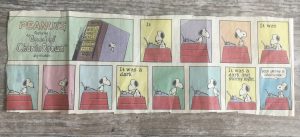
Connect with me on Facebook and Twitter!
